
Stair Academy
Stair Balustrade Core Design and Installation.
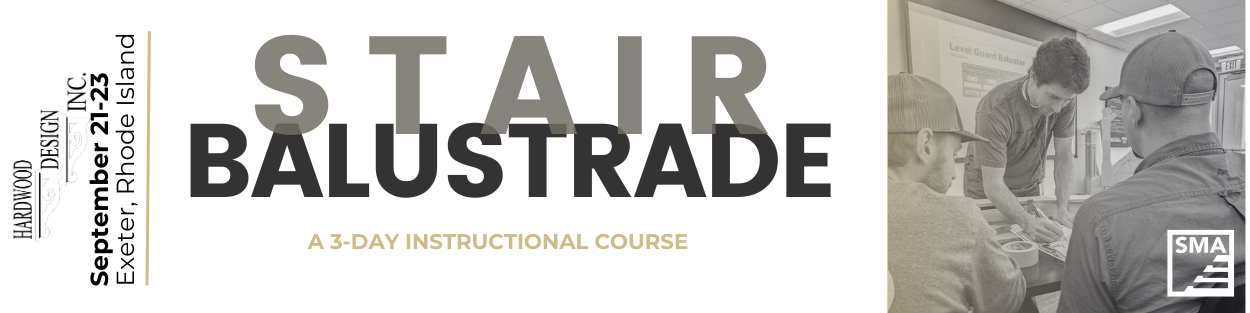
The SMA’s Stair Academy presents Stair Balustrade, an instructional class focused on teaching post-to-post and over-the-post handrail theory, skills, and basic installation practices. The fixtures, materials, and instructional workbook required for hands-on balustrade installation training are provided to each student.
- 3-Day, Hands-On Course
- Balustrade Theory with Calculations and Layouts
- Newel, Baluster, and Handrail Placement
- Over-the-Post and Post-to-Post Techniques
- Cable, Iron, and Wood In-Fill Styles
- Radius Level Balustrade Layouts
Attend the Next Session.
Visit our Events page to see when the next session of the Stair Balustrade Class will be or contact the SMA Office with questions at sma@stairways.org or call 877-500-5759.
Course Testimonials
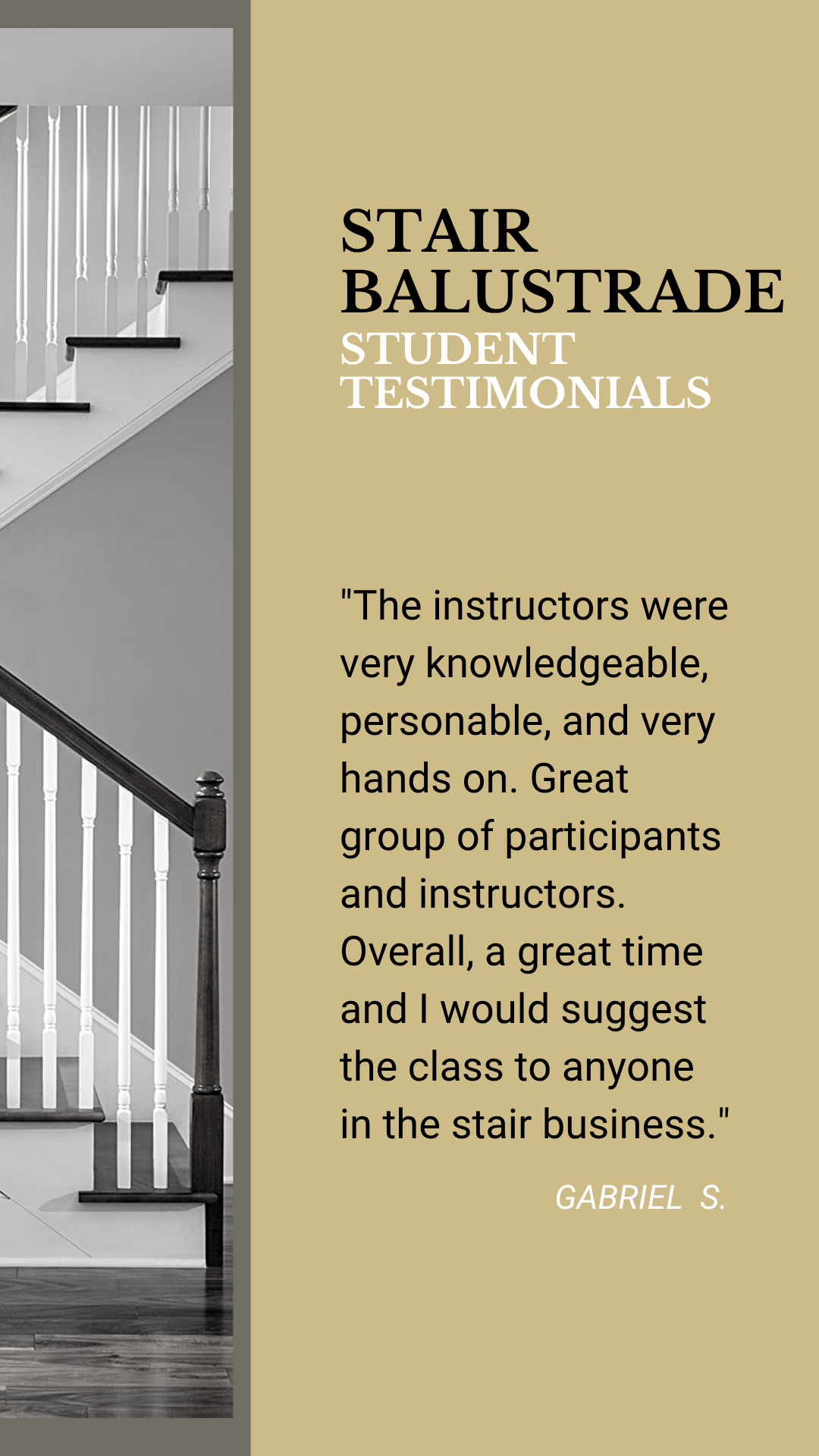
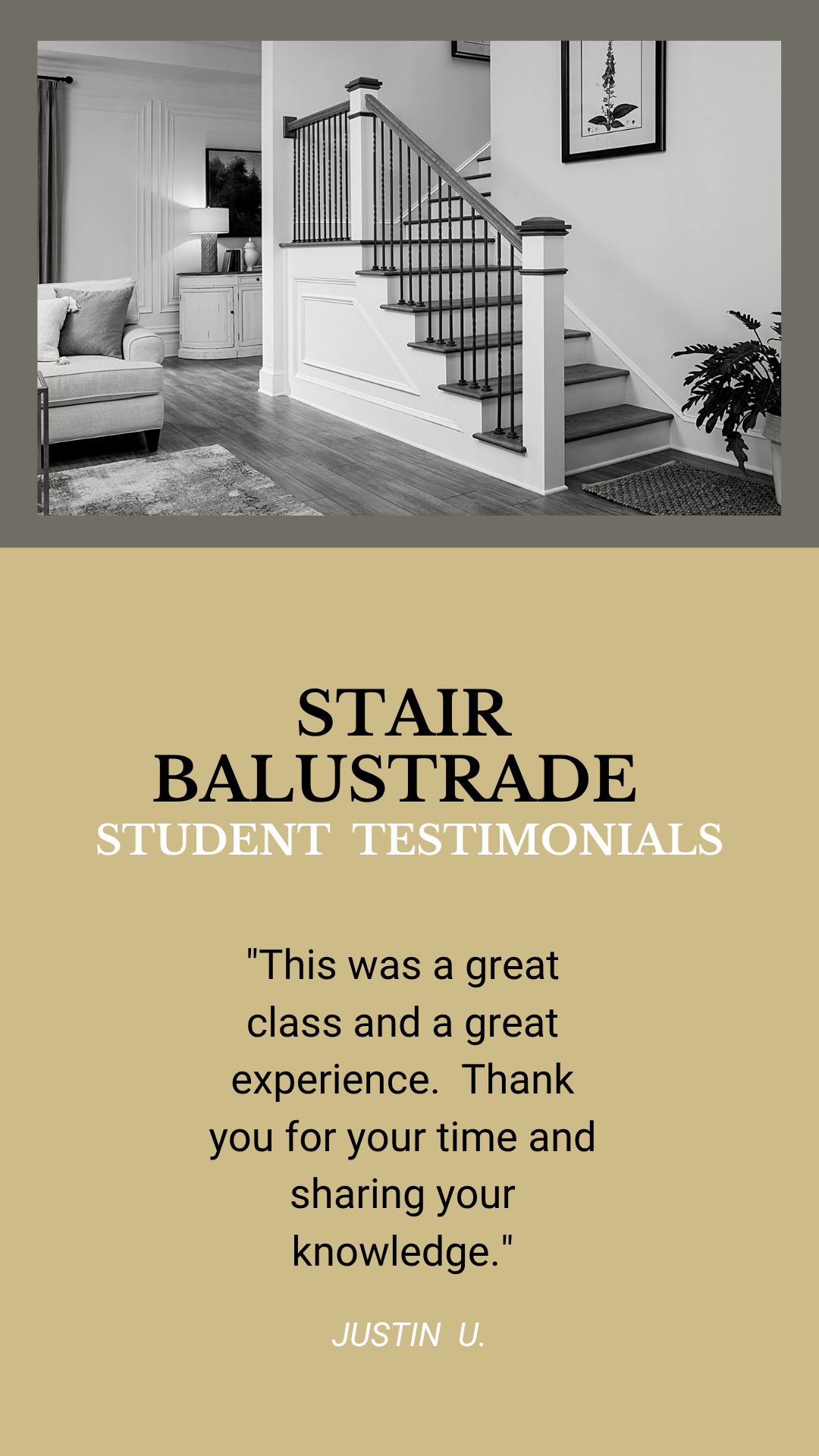
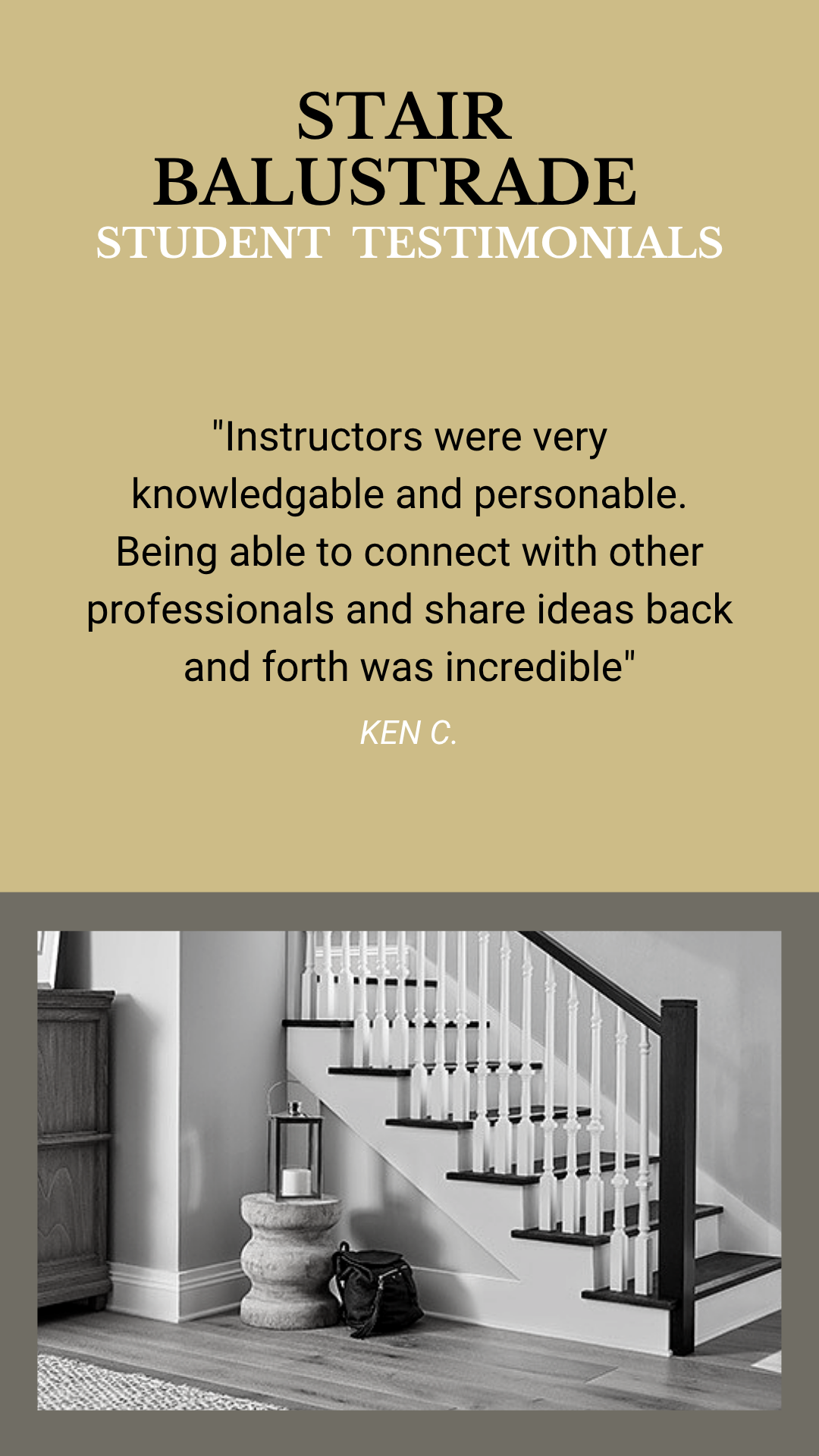
See what our Students are saying!
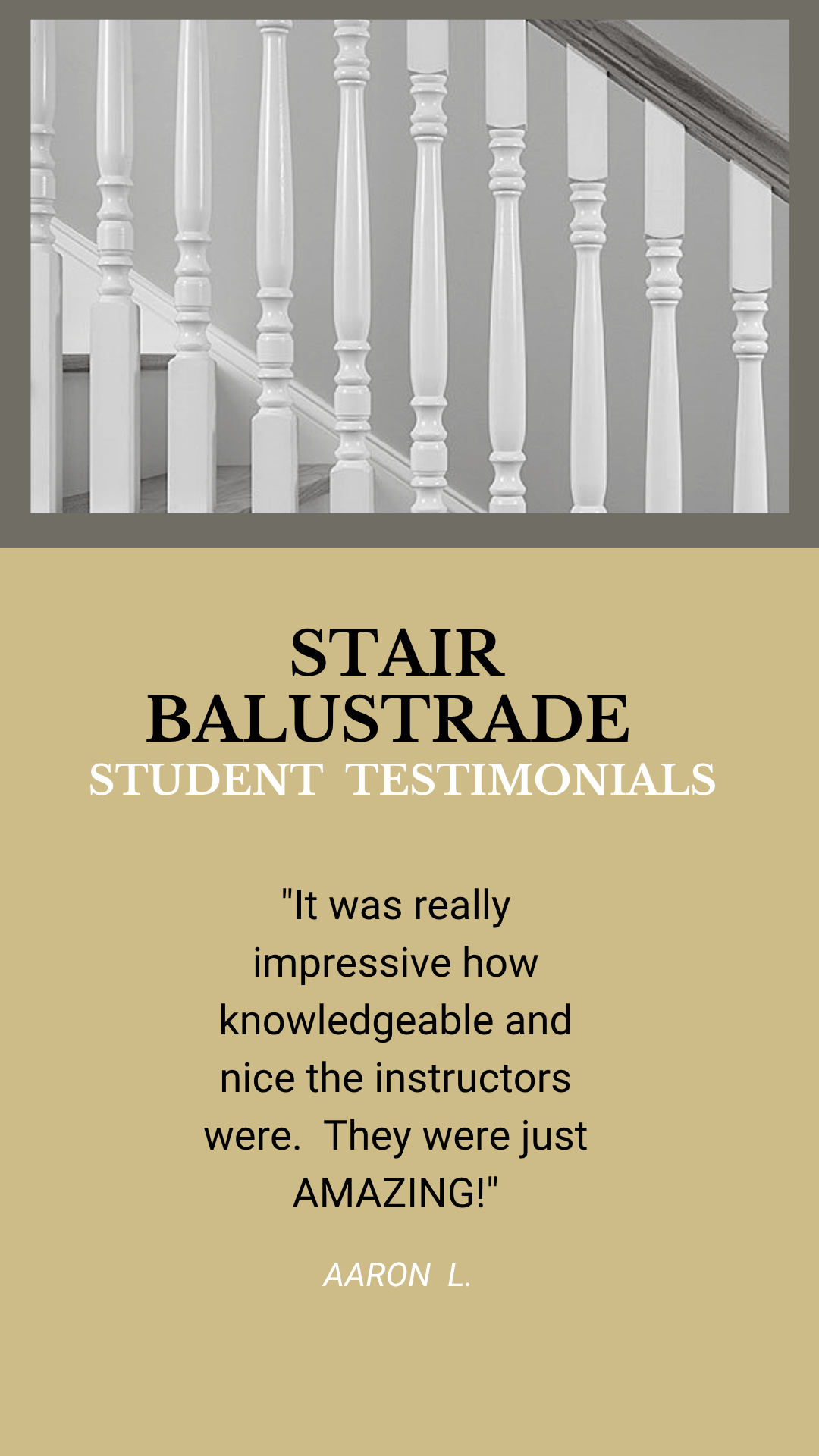
Course Description
3-Day Course
The Stair Balustrade instructional class is a 3-day course that focuses on installation best practices for post-to-post and over-the-post systems. The class offers hands-on instructional training with student workstations specifically designed to enhance the understanding and practice of balustrade layout from the starting newel through handrail fittings and wall termination. The class teaches the student how to calculate handrail height, baluster spacing, lengths, and newel placement. Special focus is given to corrective methods for issues as they arise without stopping the workflow.
Learning Objectives:
- Participants will be able to plan layouts of balustrade locations on flights, starting steps, landings, and balconies on open, closed, and buttress configurations.
- Participants will be able to create elevation layout locations for newel locations in notched and surface applications.
- Participants will be able to design layout options of landing tread, fascia/apron, and trim.
- Participants will be able to organize layout locations for baluster grouping, handrails, fittings, fitting connections, and balusters in drilled and plowed installation.
- Participants will be able to use various types of accessory hardware and connection methods for newels, balusters, handrails, and handrail fittings.
- Participants will be able to develop baluster renovations, cable installation, and horizontal and panel infill.